
Python and Machine Learning in Modern IoT Smart Systems
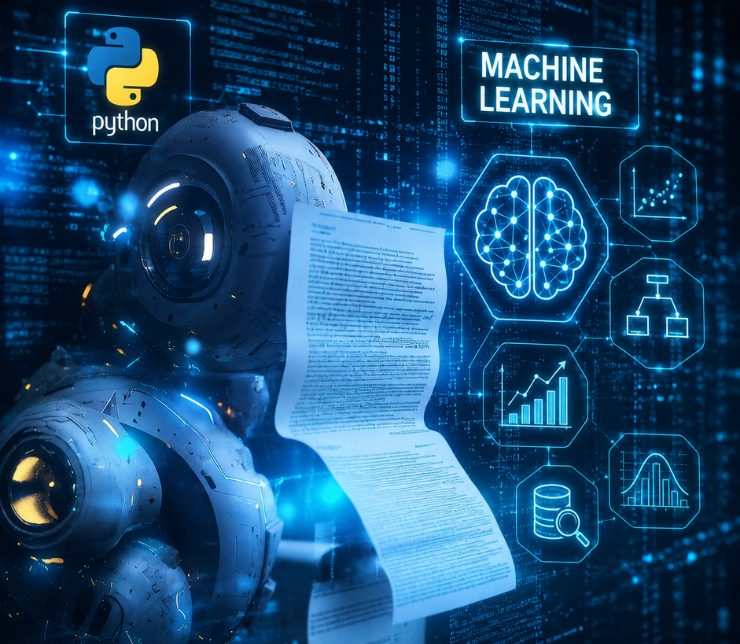
IoT devices are everywhere. They collect vast amounts of data. This data needs intelligent processing. Python is a key language for this. Machine Learning (ML) provides the intelligence. Together, they build smart systems.
The Power of Python in IoT
Python offers many advantages for IoT. Its simple syntax is easy to learn. This speeds up development time. Python has a rich ecosystem of libraries. Libraries like NumPy and Pandas handle data. Scikit-learn offers ML algorithms. TensorFlow and PyTorch are for deep learning. Therefore, developers can build complex applications quickly.
Furthermore, Python is versatile. It runs on small devices and cloud platforms. This makes it ideal for edge computing. Edge computing processes data near the source. This reduces latency. It also conserves bandwidth. Python’s portability is a major plus.
For managing your IT infrastructure, consider managed IT services. These services ensure your systems run smoothly. They handle updates and security. This allows you to focus on innovation.
Machine Learning: The Brains of the Operation
Machine Learning allows IoT devices to learn. They learn from the data they collect. ML models can predict future events. They can also detect anomalies. For example, an ML model can predict equipment failure. It can do this before it actually happens. This enables proactive maintenance.
Additionally, ML enables automation. Smart thermostats learn your preferences. They adjust temperature automatically. Smart grids optimize energy distribution. This increases efficiency. It also reduces waste. ML transforms raw data into actionable insights.
How Python and ML Work Together
Python provides the framework for ML in IoT. Developers use Python to build ML models. They train these models with IoT data. Then, they deploy the models on devices or servers. Python’s libraries simplify this process. For instance, you can use Python to gather sensor data. You can then feed this data into an ML algorithm. This algorithm might be for anomaly detection.
Moreover, Python facilitates data analysis. After ML processing, you might need to visualize results. Python’s Matplotlib and Seaborn libraries are excellent for this. They help understand model performance. They also show trends in the data.
Key Applications of Python and ML in IoT
Several areas benefit greatly. Smart homes use ML for personalized comfort. They also use it for enhanced security. Industrial IoT (IIoT) uses ML for predictive maintenance. It also drives process optimization. Healthcare IoT uses ML for patient monitoring. It aids in early disease detection. For example, wearable devices collect health data. ML analyzes this data for potential issues.
In addition, smart cities leverage ML. They use it for traffic management. They also optimize energy consumption. Environmental monitoring systems use ML. They predict pollution levels. They also track weather patterns.
Common Real-world Challenges
One challenge is data security. IoT devices can be vulnerable. Protecting sensitive data is crucial. Another issue is data volume. Handling massive datasets requires efficient processing. Also, real-time decision-making is essential. ML models must respond quickly. Finally, integrating diverse devices can be complex.
Solutions and Best Practices
To address security, use encryption. Implement secure authentication protocols. For data volume, consider cloud-based storage. Use distributed computing for processing. Optimize ML models for speed. Employ efficient algorithms. For integration, use standard communication protocols. Also, leverage APIs for seamless connections. Consider partnering with experts in AI/ML development services. They can help build robust solutions.
The Future of IoT with Python and ML
The synergy between Python and ML is growing. More intelligent IoT applications will emerge. We will see more personalized experiences. Automation will increase across industries. Edge AI will become more prevalent. This means more processing power on devices. As a result, IoT systems will become more powerful.
The role of Python and ML is undeniable. They are shaping the future of smart technology. Their combined power drives innovation. Businesses can leverage these technologies for growth. Sruta Tech offers expertise in these areas. We help businesses harness the power of AI and IoT. Visit our contact page to learn more.
FAQ
Q.1 What makes Python ideal for IoT development?
A.1 Python’s simple syntax speeds up development. Its extensive libraries support data handling and ML. Also, it runs on various devices, from small sensors to cloud servers, making it highly versatile for IoT projects.
Q.2 How does Machine Learning enhance IoT systems?
A.2 Machine Learning enables IoT systems to learn from data. This allows for predictive analytics, anomaly detection, and automation. As a result, systems can make smarter decisions and optimize operations without constant human intervention.
Q.3 Can Python be used for real-time ML in IoT?
A.3 Yes, Python can be used for real-time ML in IoT. Optimized Python code and efficient ML libraries allow for rapid data processing and model inference. This is crucial for applications requiring immediate responses, like autonomous systems.
Q.4 What are some common challenges in implementing ML with IoT data?
A.4 Common challenges include managing large volumes of data, ensuring data security and privacy, processing data in real-time, and integrating diverse IoT devices. Also, maintaining model accuracy over time is important.
Q.5 How can businesses benefit from integrating Python and ML into their IoT strategies?
A.5 Businesses can gain significant advantages. These include improved operational efficiency, reduced costs through predictive maintenance, enhanced customer experiences, and the creation of innovative new products and services. Moreover, data-driven insights lead to better strategic decisions.
